

New Study
Getting active travel distances right for children
Guest Author: Clare Charlton
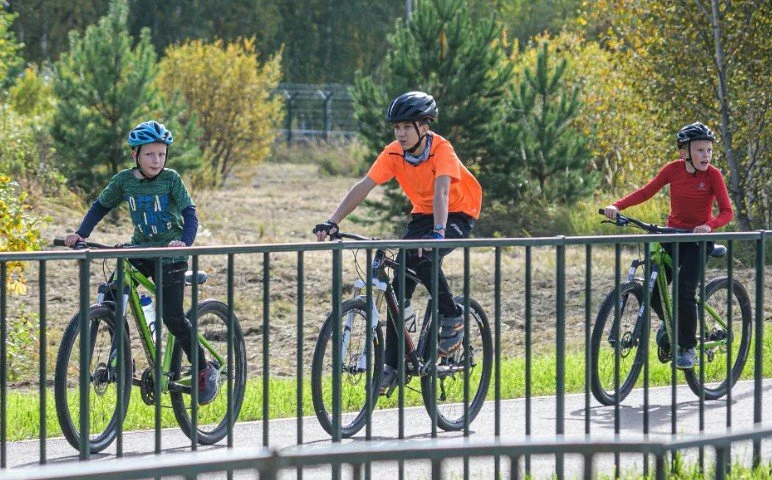
When it comes to active travel distances to school, how far is about right?
A 2026 study by Jennifer Kent and colleagues undertakes a systematic review to provide a more precise answer to the question ‘how far or for how long will children cycle or walk to school?’
Active travel offers a daily opportunity to increase physical activity and create active habits during the formative years of childhood and adolescence. Children and young people arrive at school, fitter, with a healthier body weight and with lower exposure to air pollutants.
When designing active travel either into new developments, establishing school catchment areas or creating local campaigns and infrastructure to support walking and cycling to school, how far is ‘just right’ so active travel is more likely to be adopted?
Kent et al. (2026) screened 10,680 studies that included measures of time and distance in relation to children, schools and active travel (walking and cycling). From those, 149 papers were analysed containing records for 500,000 children’s travel patterns. These studies dated from 2003 to 2023 and over one third were from European countries which is a factor to consider in terms of relating this to the UK.
The research concluded that children on average walk 1km or for 14 minutes and cycle an average of 2.7km or 13 minutes to and from school. This provides insights for policy development and practical action locally. It also sits well with the 15-minute city approach to neighbourhood planning and development.
Translation into Action
This research is important for strategic and local planning teams, policy makers, public health teams, school place planners and active travel/transport teams.
Understanding the distances and times that children travel on average provides an opportunity to consider the sizes of school catchment areas and the location of cycling/walking infrastructure to make active travel the easier sociable choice for families.
When planning new neighbourhoods and developments, the 14-minute criteria can be used to ensure that active travel is designed based on behaviours and provides a realistic expectation for families.
Design of local environments with the 14-minute approach to the school commute supports behaviour change through creating physical opportunities, increasing the psychological feeling of capability and, where walking and cycling could be faster than car travel (allowing for finding a parking space), a motivating factor.